The Lundy Model - Squared
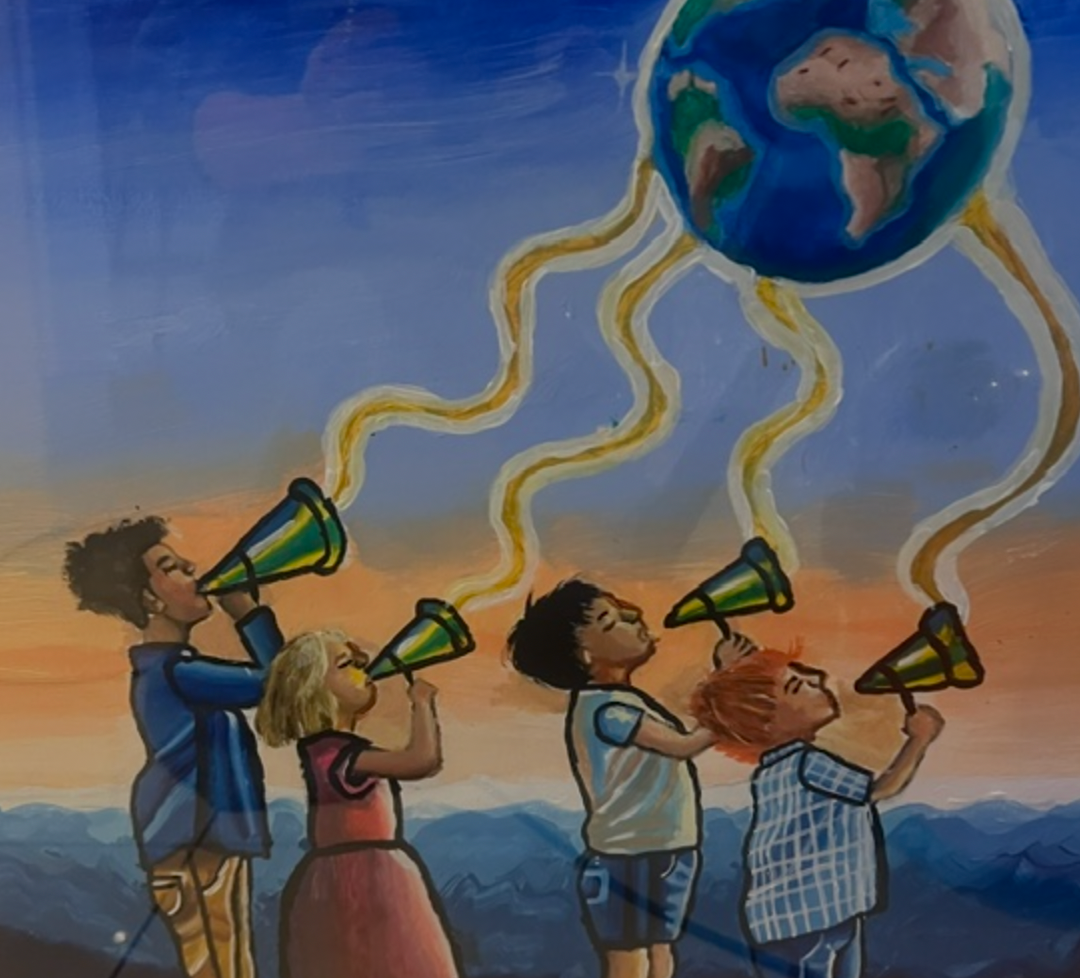
Image painted by José: St. Aidan’s Community School, Dublin
One of the ironies of the Lundy Model, like the UNCRC itself, is that an approach that advocates for children’s right to be heard did not involve children when it was created. While it was inspired by and based in part, on a study that included the views and experiences of over 1000 children, the conceptual framework for Article 12 of the UNCRC was written by one adult – me. Of course, my focus at that time was on promoting better understanding among adult duty-bearers rather than children. So, it has been deeply gratifying that, over the years, so many children and young people have taken the model and made it their own which in turn - not surprisingly - has strengthened our understanding of child and youth participation. For me, that’s the Lundy Model squared.
Below I set out some examples. But first, I start with a speech that was given by Tash (then 17 and a member of Leicester City Council’s Care-Experienced Council) at the launch of Leicester’s ground-breaking participation strategy. When it was sent to me by Bez Martin, I had goosebumps when reading it since Tash captured what it is all about so succinctly and powerfully.
“Personally – the concept of space, audience, voice and influence can make a massive impact. Alone, they are relatively small things, easy to implement but collectively making a world a difference. To be able to make choices within this group for not only myself but for other young people in care is so incredibly liberating and important and for me this perfectly represents voice. But voice doesn’t have to be this profound or difficult – it can simply consist of having someone to talk to and being heard and considered. Space is feeling safe and steady – having a ‘home’ or a safe place to be able to connect with yourself and your feelings in a way that is productive and honest. Audience is the idea of being able to communicate the ideas to someone who can help and make a difference. Living in care is hard but having no one to talk to is harder. A foster carer, social worker, member of the council or even a teacher can make all the difference – it again links to the idea of voice and being heard. Influence is not always about seeing change but also knowing why things may not be able to change. The way that is communicated is so important so regardless of the outcome, being able to know that you were able to have your say and even have the ability to have some type of influence is so powerful. Despite all these stages being separate, they are also inextricably linked – to be able to satisfy one, it the ability to eventually satisfy all.’”
Adaptations of the Lundy Model by Children and Young People
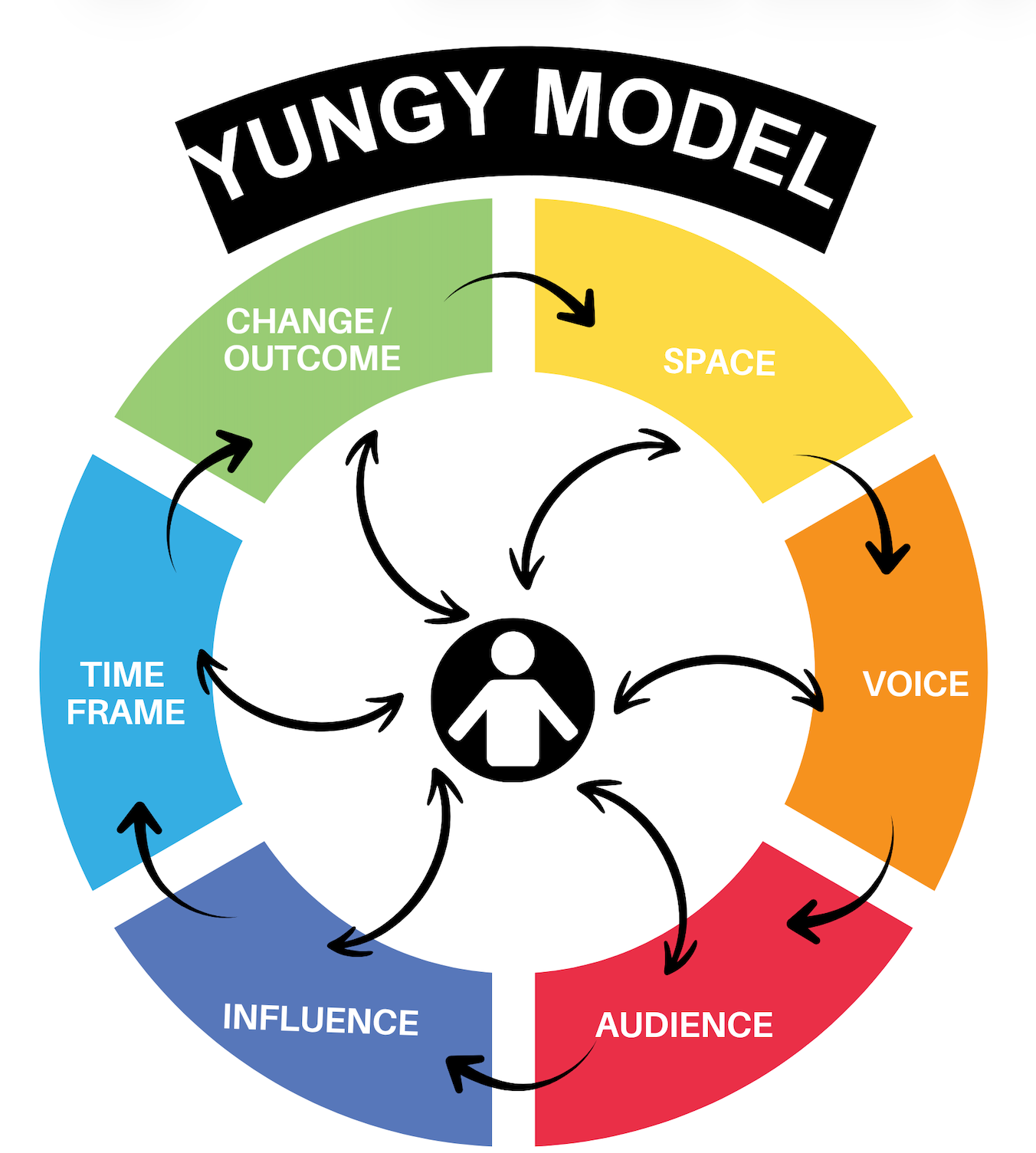
Camden Youth Council’s adaptation of the YUNGY Model. They provide additional emphasis to follow on from influence – a time-frame and outcomes.
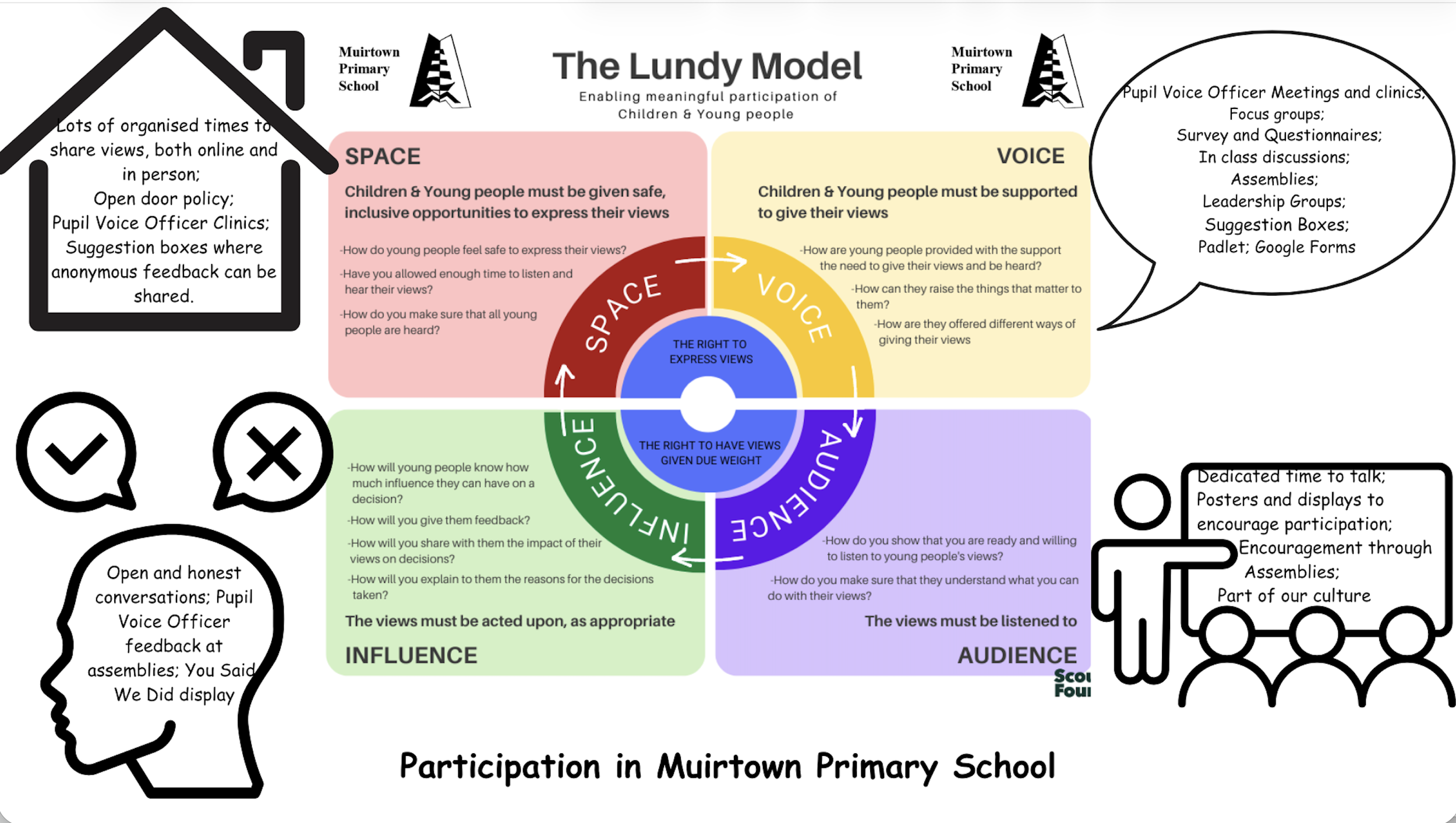
Muirtown Primary School’s demonstration of what it means for it to be implemented in their school in the Scottish Highlands:
Other very powerful examples:
-
Hub na nÓg’s evaluation tools created with children: This one pager provides such a clear and simple articulation of each of the concepts.
-
Sophie-Rose’s beautiful interpretation of why each of the four concepts matter to children and young people, shared on Linkedin.
-
The Scottish Youth Parliament’s The Right Way training package. Their ‘meaningless meetings’ training is one of my all-time favourites.
-
Almost anything from Participation People who continue to push and extend the model and youth participation. I loved this recent, straight to the point, young people’s version of the four concepts in collaboration with SparkSpace.
Safe Space
Be Yourself
The Right People Hear You
Something Actually Changes
-
Malta’s Empowering Children Platforms’ adaption of the 4 F Framework (i.e. the Influence dimension of the model) by the Children’s Advisory Group of the Maltese Commissioner for Children.
-
Anna Freud’s Lundy & Me videos which capture how it feels to be heard.
-
Guidance on applying the model in the context of sexual abuse and exploitation developed by young advisers with the team at the University of Bedfordshire’s Safer Young Lives project: "Space, voice, audience and influence aren't given to young people affected by sexual abuse and exploitation enough, when they not only deserve it, but desperately need it.
-
Online Training co-created with young people with Lancashire County Council and the University of Lancashire
-
The Diana Award’s Youth Voice Charter, designed by self-professed Lundy super-fan, Arthur Templeman-Lilley.
And then this….
I am one of those people who cries a lot: my heart is not only on my sleeve but generally floating somewhere outside of my body. However, to my recollection, I have never cried at when asked to speak at a public event. That changed last December when I was invited to St Aidan’s in Dublin to launch their wonderful Spotlite programme. I was presented with a painting that opens this blog that interprets the Lundy Model created by the fabulous José (artist, poet, singer, dancer, hairdresser). José read a spoken word poem which accompanied his painting, weaving together not just what the Lundy model does but why it matters so much for children and young people to be heard and know that they belong and that their views matter. I was up after him and, well, let’s just say that there is always a first time for everything…
I have often compared the application of the Lundy Model to a colouring-in book. Its success is, in part, to the fact that people can paint themselves and their own experiences and context into the concepts of space, voice, audience and influence, making it their own while implementing Article 12 in a way that is both robust and real. I am inspired by and deeply grateful to the many children and young people, and the adults who support them, who have done just that and, in doing so, have brought the four concepts and, along with them, children’s rights-based participation to life in so many colourful, engaging and powerful ways.